



Light seal set for analog SLR cameras
Light seal set for analog SLR cameras
Availability for pickups could not be loaded
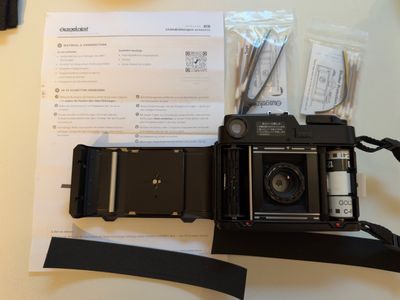 Rainer K.Verified purchasePraktisches Set zur Erneuerung der LichtdichtungenIch selbst habe zwei gekauft, weil ich es für größere Mittelformat-Rollfilmkameras verwendet habe. Da die Längen einfach zuschneidbar sind hat das gut geklappt. Insofern alles…
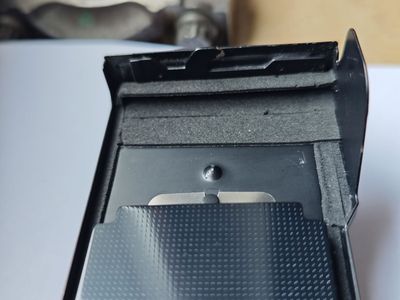 Dirk B.VerifiedUniversal LichtdichtungenDie Verarbeitung des Dichtsatzes ist sehr gut, nur waren die meisten Breiten für mich nicht nutzbar. Aber ich habe meine Olympus 35 RC damit wieder "dicht" bekommen. Die Pinzette…
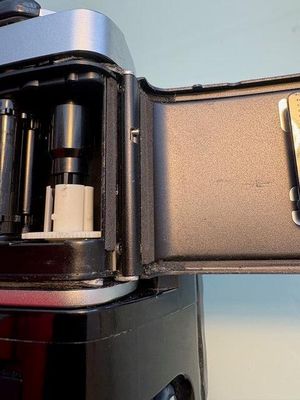 Robert W.VerifiedSehr gutt!Nach Lichtdichtungen van 2 anderen hersteller endlich etwas das gutt funktioniert.
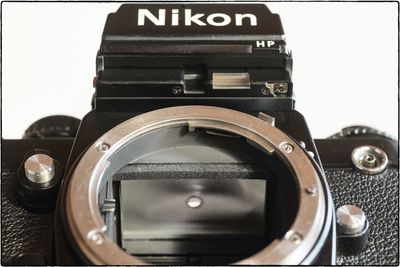 Helmut B.VerifiedSpiegeldämpfer erneuertSpiegeldämpfer erneuert laut Anleitung. Zu empfehlen.
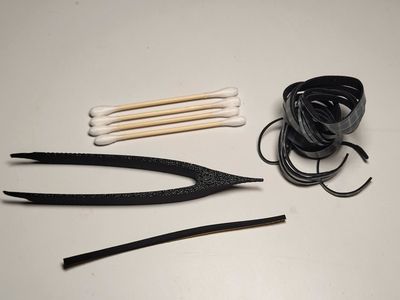 Tim E.TopArtikel wie beschrieben, Dichtungen haften/kleben gut und von Umfang für's Erste mehr als ausreichend für die Ausbesserung von meinen Kameras. Sehr zu empfehlen.
Free shipping in Germany
Free shipping in Germany
With free shipping to your home in 2-4 days.
30-day money-back guarantee
30-day money-back guarantee
You can test any product for 30 days. If you are not satisfied, we will refund the full purchase price including shipping costs. No ifs, ands, or buts.
- Fits all 35mm SLR cameras: 517 compatible models from 30 manufacturers: Canon, Nikon, Minolta, Olympus, Pentax, Yashica and many more. Check your model in the compatibility list.
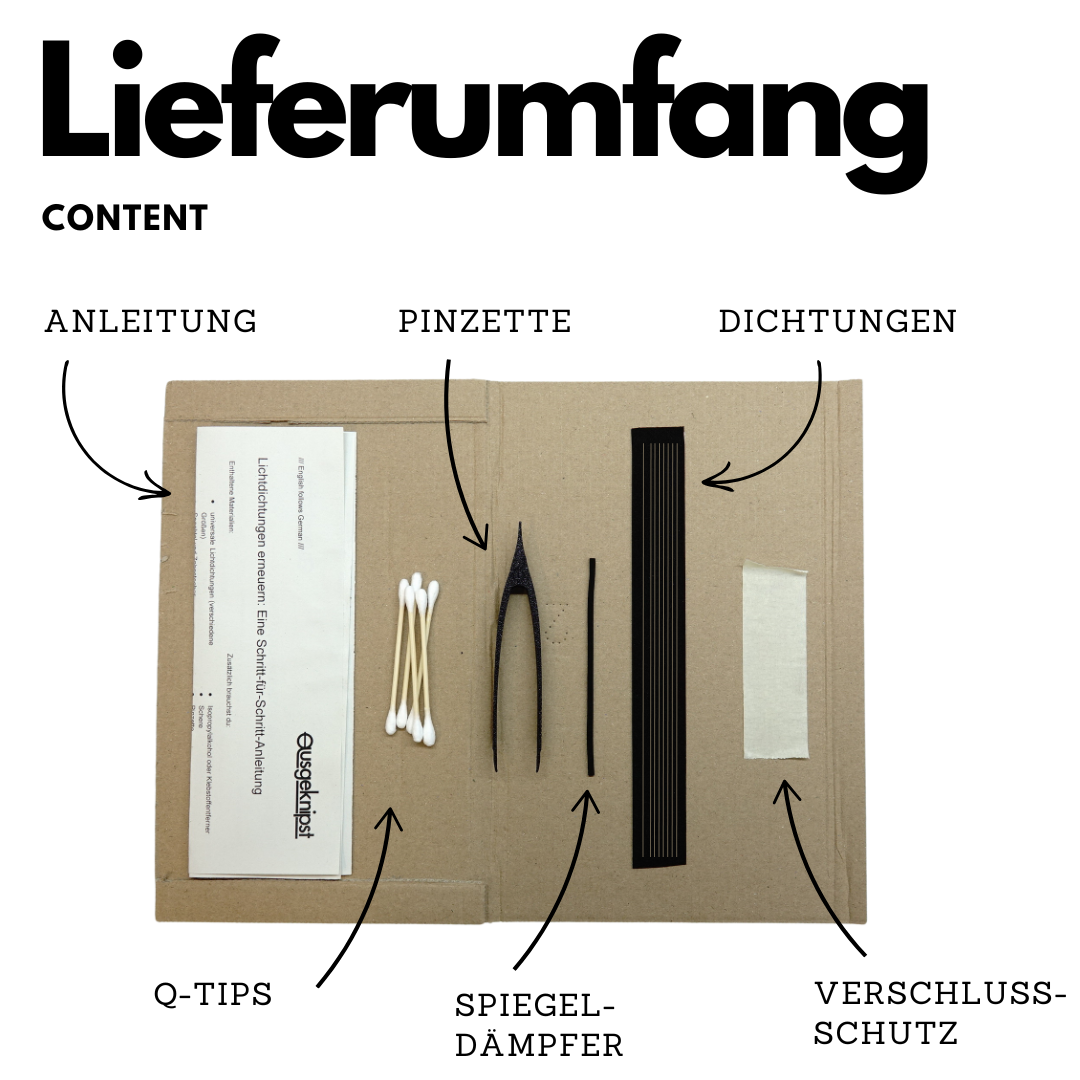
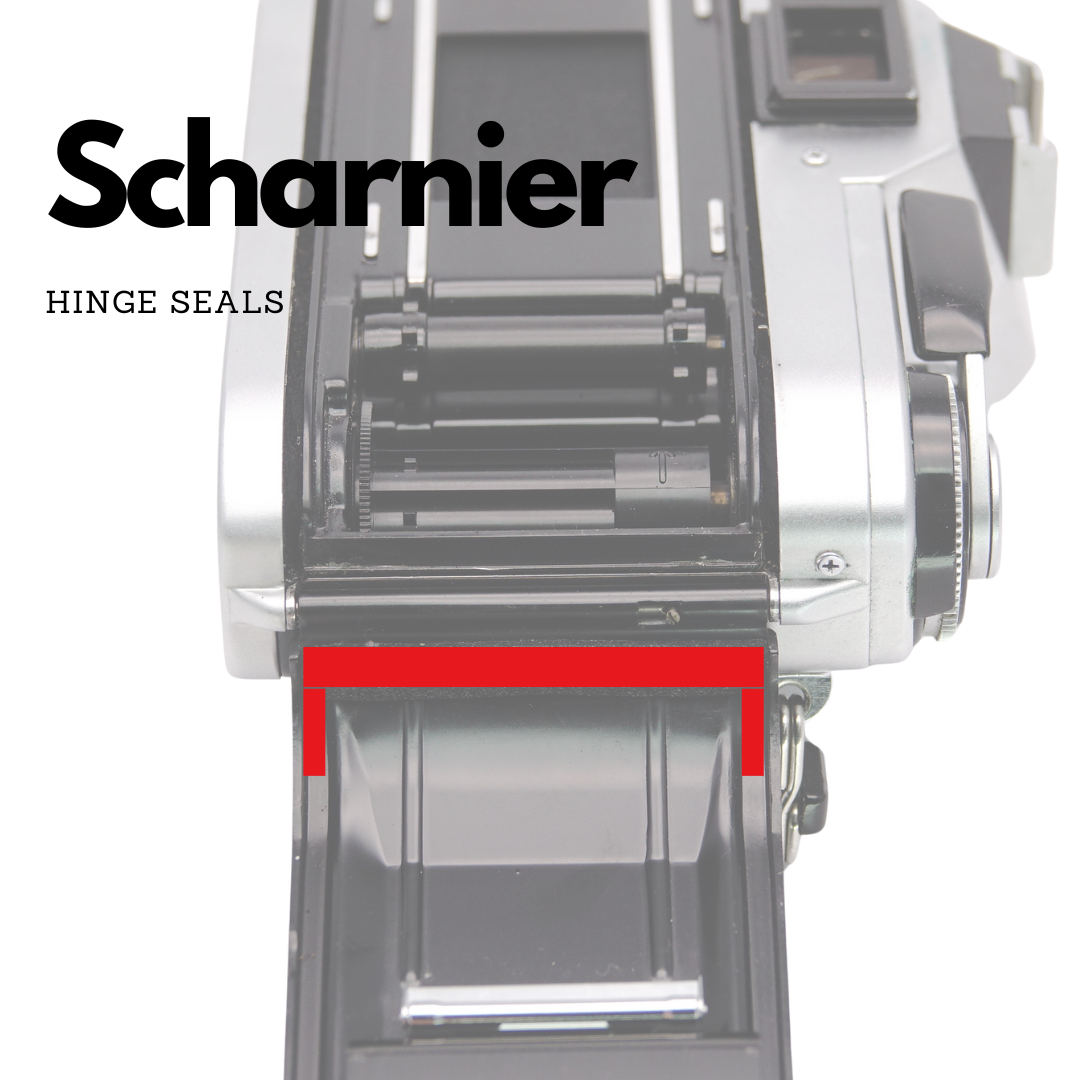
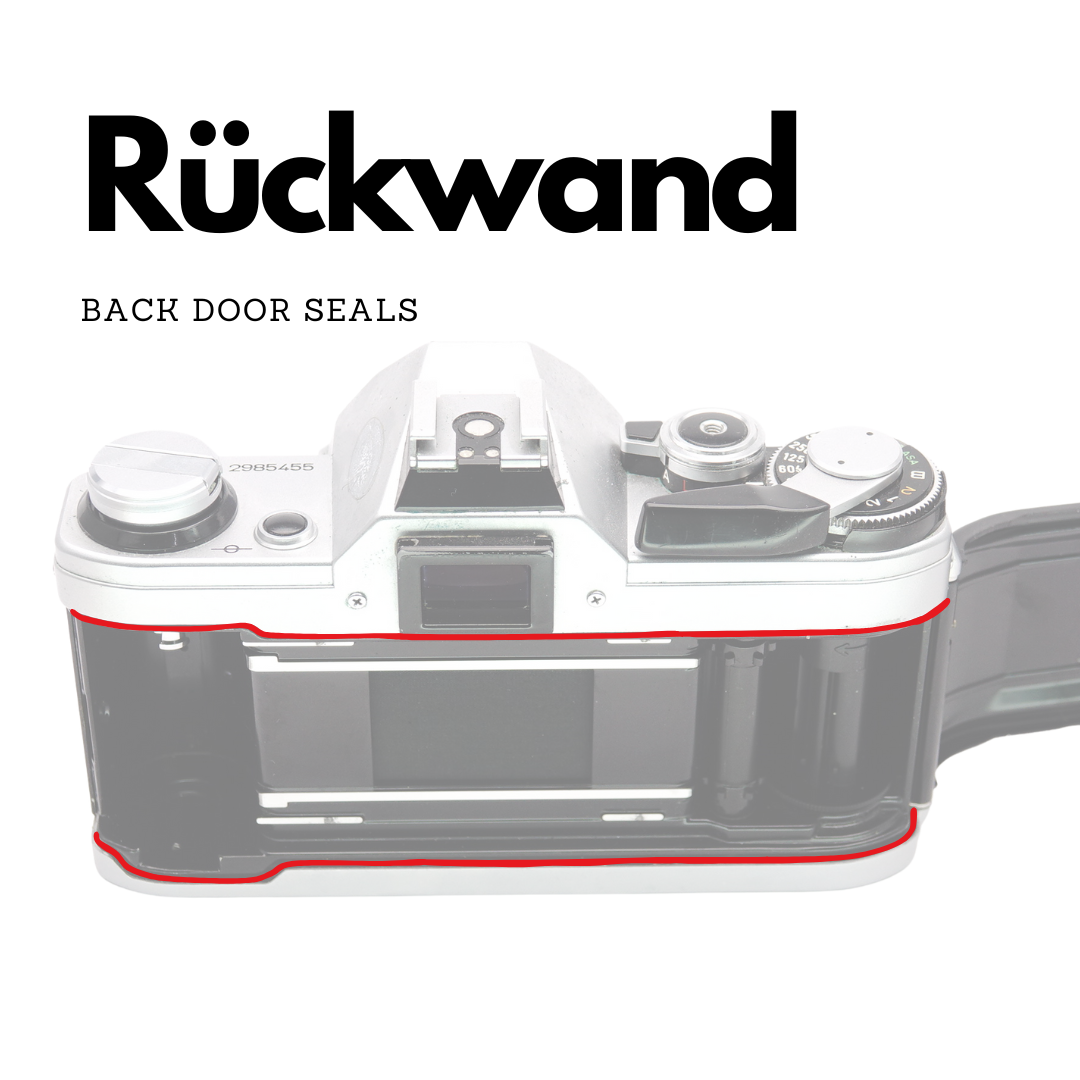
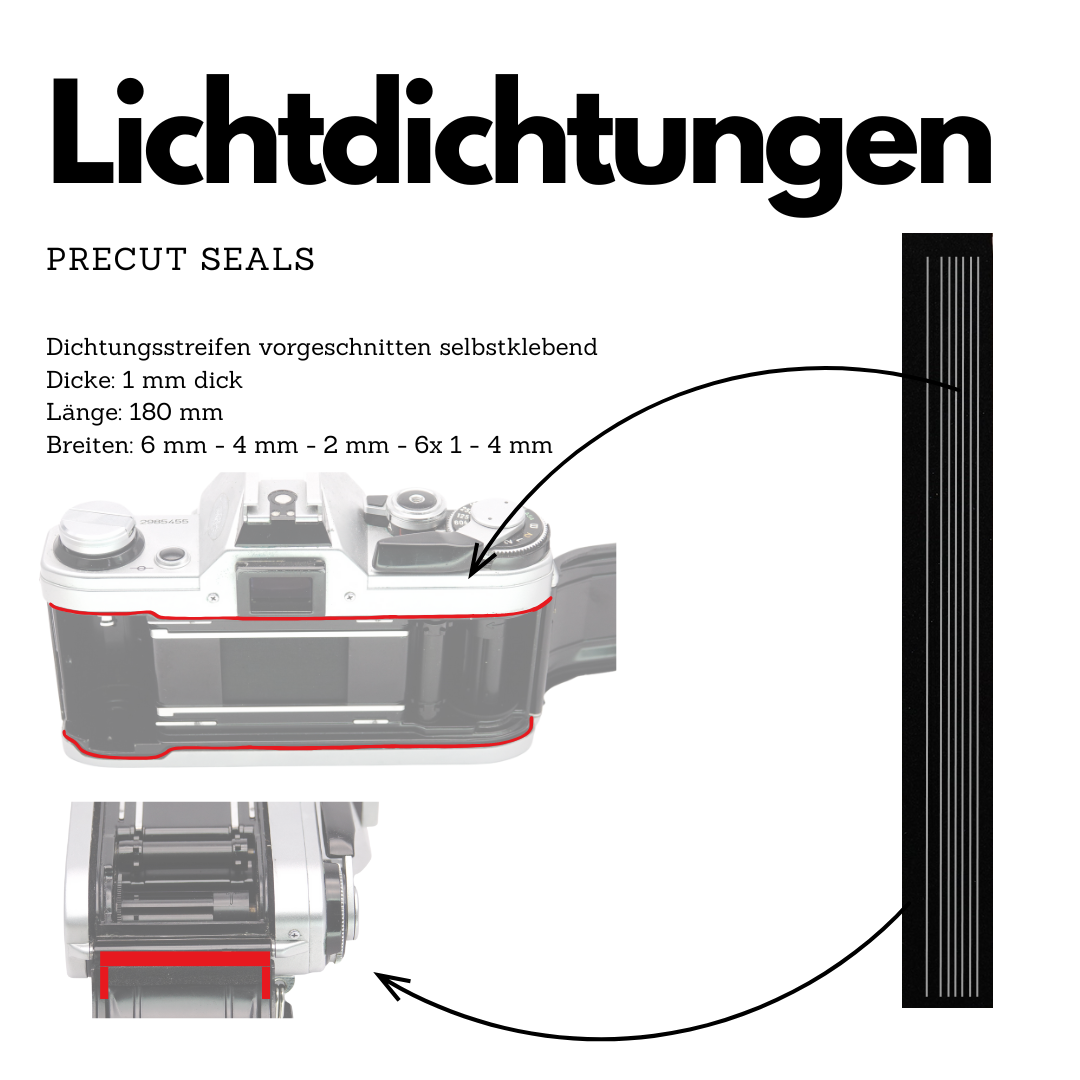
- Complete tool set for doing the replacement yourself: Self-adhesive seal strips in 4 widths, mirror damper, tweezers with scraper (also for peeling off the protective film), cotton swabs, shutter curtain protector and instructions with a QR code linking to the video. All you need in addition is isopropanol and a pair of scissors.
- Doable even without prior experience: Instructions and a step-by-step video guide you through every move, so the replacement works out even if you have never opened a camera before.
- More material than a pre-cut kit: Universal strips to cut to size, enough for 1–2 or 2–3 cameras depending on the variant, sturdier and more flexible than contour-cut seals, which tear easily at the cut edges. Plenty of reserve in case a strip goes wrong for you in a tricky spot.
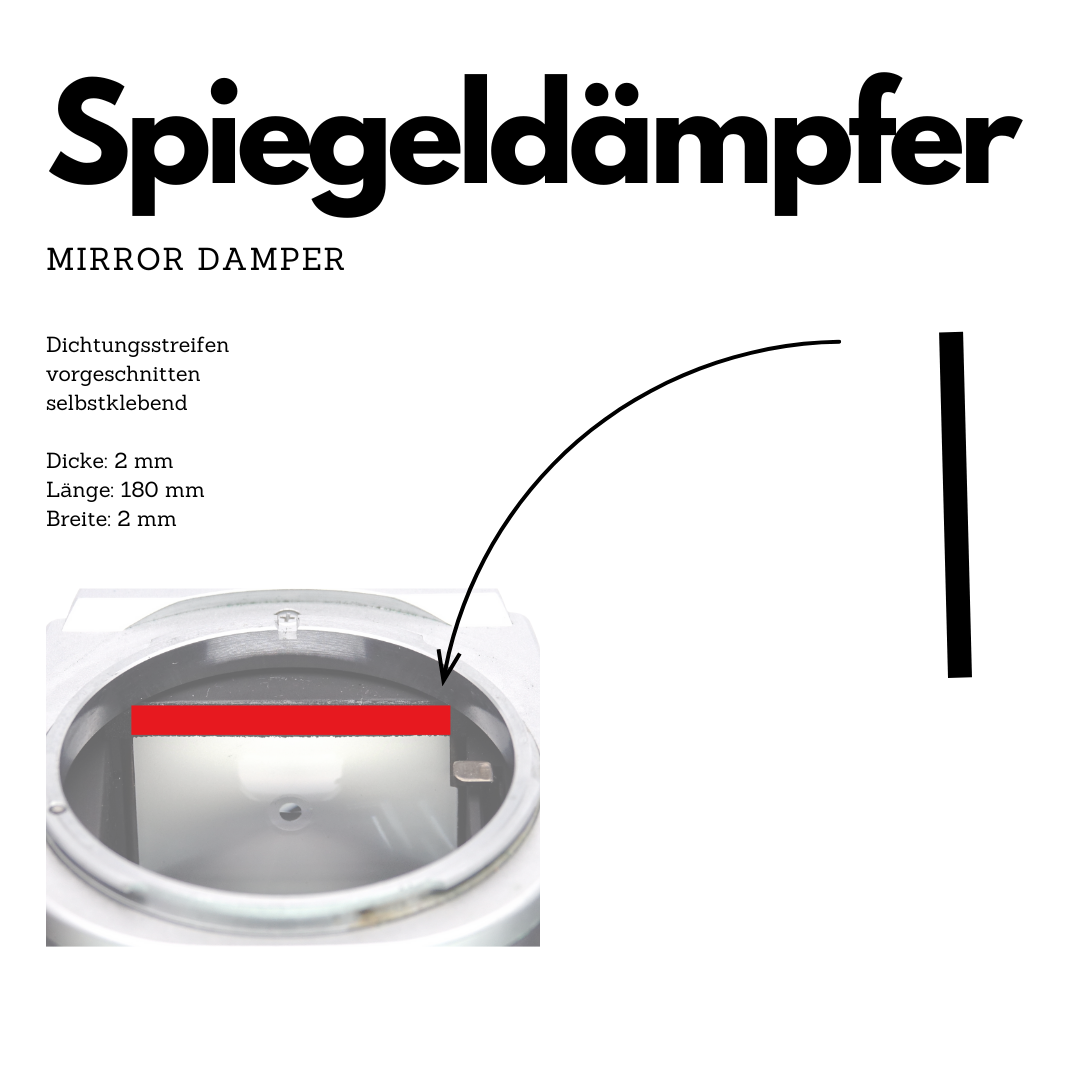
- Mirror bumper damper included: The forgotten wear part. Without a working damper, the mirror slams hard against its stop every time you release the shutter, causing vibrations that reduce sharpness.
Compatibility
Fits all analog 35mm single-lens reflex cameras (SLR) with standard seal channels. The most common models:
- Canon: AE-1, AE-1 Program, A-1, AT-1, AV-1, F-1, FTb, EF, TX, TLb, EX Auto
- Nikon: FM, FM2, FM2n, FE, FE2, FA, FG, FG-20, EM, F2, F3, Nikkormat FTn/FT2/EL
- Minolta: SRT 101/102/303, X-700, X-500, X-300, X-370, X-570, XD-7, XG-1, XG-2, XG-M, XG-9
- Olympus: OM-1, OM-1n, OM-2, OM-2n, OM-2SP, OM-3, OM-4, OM-10, OM-20, OM-30, OM-40
- Pentax: K1000, ME, ME Super, MX, MV, MG, KM, KX, K2, Spotmatic, LX, Super A, P30
- Yashica: FR, FR-I, FR-II, FX-3, FX-3 Super 2000, FX-7, FX-D, TL Electro, Electro AX
- Contax: RTS, RTS II, 137 MA, 137 MD, 139 Quartz, 159 MM, S2, ST, Aria, RX
- Ricoh: XR-7, XR-P, KR-5, KR-5 Super, KR-10, XR-500, XR-2, TLS 401
- Konica: Autoreflex T3, T4, TC, FS-1, FC-1, FT-1, Acom-1, TC-X
- Praktica: MTL 3, MTL 5, MTL 5B, B200, BCA, BC1, BX20, Super TL, LLC, VLC
- Fujica: ST605, ST605n, ST701, ST705, ST801, STX-1, STX-2, AX-5
- Chinon: CE-4, CE-5, CM-3, CM-4, CM-5, CM-7, CP-7
- Cosina: CT-1, CT-1 Super, CT-1A, CT-7, CT-10, CT-20
- Mamiya: MSX 500, DSX 1000, ZE, ZE-2, ZE-X, ZM
- Petri: FT, FT II, FT EE, FTE, FA-1, MF-1, GX-1
- Topcon: RE Super, Super D, Unirex, IC-1 Auto
- Miranda: Sensorex, Sensorex II, Sensorex EE, dx-3, RE-II
- Rollei: SL35, SL35M, SL35E, SL35ME
- Vivitar: V3800N, V4000, 220/SL, 450/SLD
- Zenit: E, EM, ET, TTL, 11, 12, 122
Also fits many rangefinder cameras (e.g. Canonet QL17, Olympus XA), TLRs and point-and-shoot cameras with a back door seal. If your camera has a foam seal in the back door, this kit will work.
View the full compatibility list: 517 models from 30 manufacturers
What's included
-
For 1–2 cameras:
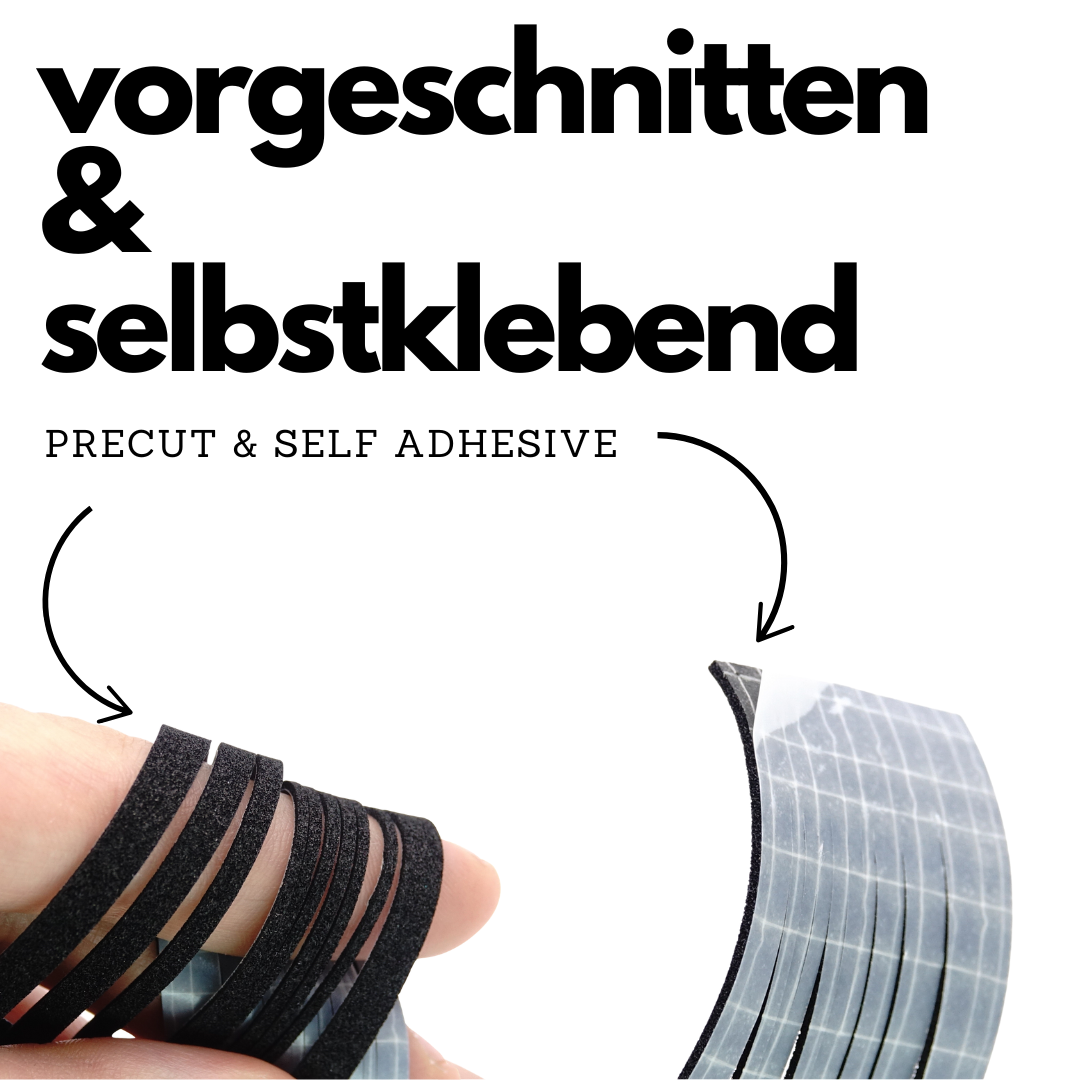
- 1x sheet of pre-cut light seal strips (self-adhesive, 1 mm thick, 4 widths)
- 1x mirror bumper (self-adhesive strip, 2 mm thick)
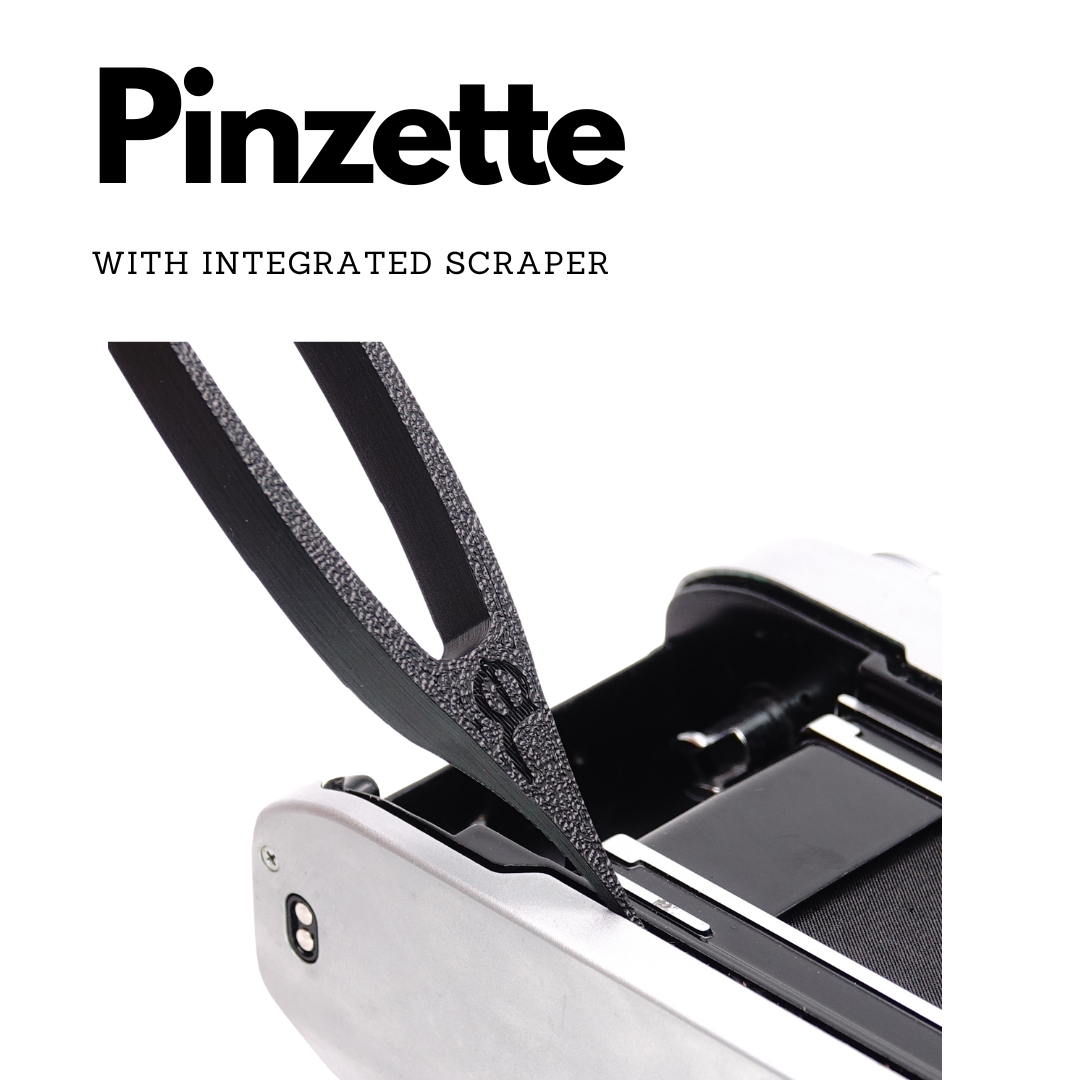
- 1x tweezers with scraper on the back end
- 4x cotton swabs
- 1x shutter curtain protector (removes without residue)
- 1x instructions (DE/EN)
-
For 2–3 cameras:
- 2x sheets of pre-cut light seal strips (self-adhesive, 1 mm thick, 4 widths)
- 2x mirror bumpers (self-adhesive strip, 2 mm thick)
- 2x tweezers with scraper on the back end
- 8x cotton swabs
- 2x shutter curtain protector (removable without residue)
- 2x instructions (DE/EN)
-
With film window seal (Leica R, Contax, Ricoh):
- 1x sheet of pre-cut light seal strips (self-adhesive, 1 mm thick, 4 widths)
- 1x mirror bumper (self-adhesive strip, 2 mm thick)
- 1x tweezers with scraper on the back end
- 4x cotton swabs
- 1x shutter curtain protector (removable without residue)
- 1x instructions (DE/EN)
- 2x seal for the film window in the back door (self-adhesive)
Technical Details
- Material: special light seal foam (self-adhesive)
- Widths: 1 mm, 1.5 mm, 2 mm, 3 mm strips
- Thickness: 1 mm (light seal strips), 2 mm (mirror bumper)
- Type: universal strips (cut to the required length)
- Quantity: depending on the variant, enough for approx. 1–2 or 2–3 cameras
Description
Over the years, the light seals of your analog camera break down into a sticky, crumbly mass; on almost every camera from the 60s to the 80s, the original sealing foam is worn out after 20–40 years. The consequences are twofold: light leaks through the gaps onto the film and causes bright streaks or spots on your shots. At the same time, the sticky residue works its way into the mechanism, onto the mirror, the shutter curtain and the film guide.
The vast majority of cameras available on the used market are sold with deteriorated light seals. Unless the seller explicitly mentions it, you can assume that the seals need to be replaced. Apart from isopropanol and a pair of scissors, this kit contains everything you need to replace them yourself. Isopropanol is available online as cleaning alcohol (IPA) or at the pharmacy.
Practical tips
- Remove the back door: On most 35mm SLRs (Canon AE-1, Olympus OM-1, Pentax ME), you can take off the back door without tools by pulling the hinge pin. Working on a loose door is much easier.
- Protect the shutter: Before you start, cover the shutter curtain with the included shutter cloth guard. The curtain is extremely thin, so never touch it with tools or fingers.
- Peel off the backing: The included tweezers also serve as a peeling aid. They make it easy to grip and peel the backing off the narrow strips.
- Avoid the frame counter opening: On the back door (usually at the top right) there is a small opening for the frame counter reset. No isopropanol or sealing material must get into it.
- Focusing screen: no alcohol. Isopropanol permanently damages the focusing screen. When replacing the mirror bumper, place a trimmed Post-It over the mirror and focusing screen to catch any crumbs.
- Final cleaning: Clean the outside of the body with a slightly damp microfiber cloth and a drop of dish soap. Keep water out of the gaps in the body.
Frequently asked questions
“Why universal strips instead of pre-cut seals?”
Seals cut to shape sound precise, but they have drawbacks in practice: because of the cut edges, the narrow strips for the back door edge tear easily, and a single mistake uses up the entire kit. Universal strips are more robust, can be laid flexibly around every bend of the back door and, depending on the variant, are enough for 1–2 or 2–3 cameras. The straight strips fit into the narrow groove just as well.
“I'm not handy, can I do this myself?”
Yes. The replacement takes patience, but no special manual skill. We have sealed hundreds of cameras in our workshop and documented the method so that even beginners can do it on a quiet afternoon. Our step-by-step guide with photos and the accompanying video show every step.
“The self-adhesive strips stick to the tweezers instead of the groove”
This is the most common source of frustration. Two solutions: first, always peel off the backing in stages of just 2–3 cm, not all at once. Second, the soapy water trick: peel off the backing and briefly dip the strip in water with a drop of liquid soap. The adhesive then won't grab for one to two minutes, you can position the strip without stress, and once the water has dried, it holds as usual. We tested the trick with soapy water and with isopropanol, and soapy water works better.
“I can't get the strip into the very narrow grooves”
In narrow, deep grooves like those on the Canon F-1, the adhesive tends to grab the side walls before the strip reaches the bottom, and it tears when you push it further. A customer with exactly this camera gave us the idea: briefly dip the strip in soapy water (see above), calmly push it down to the bottom of the groove and let it dry. Alternative without adhesive: simply leave the backing on completely and press the strip into the groove without adhesive. The friction in the narrow groove holds the foam reliably in place. Several customers and we ourselves have been using this method for years without any problems.
“Do I really need a new mirror bumper? Mine still looks okay”
If the bumper is even slightly crumbly: yes. Without a working bumper, the mirror slams hard against the upper stop every time you release the shutter. This causes noticeable vibrations at long exposure times and accelerates wear on the mirror mechanism. In addition, the foam crumbs land directly on the focusing screen and the mirror.
In our video, we show the complete replacement step by step on a Pentax ME Super. The method works exactly the same on the Canon AE-1, Olympus OM-1, Minolta SRT and all other 35mm SLRs.
Watch the video: How to change light seals on a 35mm SLR (German subtitles)
You can find the detailed step-by-step guide with photos in our blog article: How to replace the light seals of your analog camera

Customer reviews
Based on 44 reviews84% verified reviews
Transparency note: As a thank-you for a published review after an order, we send every customer a discount code for their next order, regardless of the star rating.
Reviews come from customers who ordered the item from us. We send the link by email after shipping; it belongs to exactly one order. That is why every review given this way carries the note “Verified purchase”.
Lost the link? A short message with the order number to info@ausgeknipst.de is enough and we will send it again.
Customer photos and videos
-
Robert W.Verified
Sehr gutt!
Nach Lichtdichtungen van 2 anderen hersteller endlich etwas das gutt funktioniert.
-
Helmut B.Verified
Spiegeldämpfer erneuert
Spiegeldämpfer erneuert laut Anleitung. Zu empfehlen.
-
Tim E.
Top
Artikel wie beschrieben, Dichtungen haften/kleben gut und von Umfang für's Erste mehr als ausreichend für die Ausbesserung von meinen Kameras. Sehr zu empfehlen.
-
Retro M.
Funktioniert auch mit meiner Canonet :)!
-
Rainer K.Verified purchase
Praktisches Set zur Erneuerung der Lichtdichtungen
Ich selbst habe zwei gekauft, weil ich es für größere Mittelformat-Rollfilmkameras verwendet habe. Da die Längen einfach zuschneidbar sind hat das gut geklappt. Insofern alles bestens - nur die Anleitung und Verpackung sind etwas knapp bzw. lieblos, was aber dem Produkt keinen Abbruch tut.
-
Dirk B.Verified
Universal Lichtdichtungen
Die Verarbeitung des Dichtsatzes ist sehr gut, nur waren die meisten Breiten für mich nicht nutzbar. Aber ich habe meine Olympus 35 RC damit wieder "dicht" bekommen. Die Pinzette ist zum Abschaben der alten Dichtungen und zum Andrücken der Neuen gut. Für die Funktion als Pinzette ist sie aber zu dick. Werde den Dichtsatz auch für die nächste Kamera wieder kaufen.
-
Schneider T.Verified
Lichtdichtung
Lichtdichtung passt hervorragend und macht was es soll.
-
Klaus O.Verified
Durchdachtes Set
Alles was man braucht um durchzuziehen. Ohne das Kit wäre ich vermutlich erst später auf das Thema aufmerksam geworden. Besonders den Spiegeldämpfer hatte ich nicht auf dem Radar.
-
Luis G.Verified
Funktioniert wie versprochen
Einfach zu verwenden. Hat getan was es sollte. Sehr gut.
-
Martin J. K.Verified
lichtdichtung
Gut durchdachtes Set!
No reviews yet. After a purchase we ask for one by email.
After a purchase we ask for a review by email. New reviews appear automatically; we read them afterwards and never remove one because of its star rating. “Verified purchase” means the review came through the review link of an order in our shop. “Verified” marks older reviews that our previous review service, Judge.me, had labelled as verified. Reviews imported from Amazon are labelled and not included in the average. How we collect and check reviews

We are Anto & Vladi
Support a young startup
You want innovative solutions instead of mass-produced goods? With us, you don’t buy from an anonymous wholesaler, but directly from the founders. We (Anto & Vladi) started our startup in 2019 in Würzburg to help you revive analog photography.

Developed by engineers
Quality made in Germany
We don’t sell anything we wouldn’t use ourselves. We are engineers and camera nerds, and we know that precision is especially important in camera technology. That’s why every single part is designed and thoroughly tested by us here in Würzburg.

From Germany to the whole world
Fast DHL shipping
Don’t want to wait forever for your item? Every product is made fresh for you in Würzburg, checked, packed and sent out on the next shipping day (Monday, Wednesday or Friday). Within Germany it arrives in 2-4 days, with DHL or Deutsche Post.
